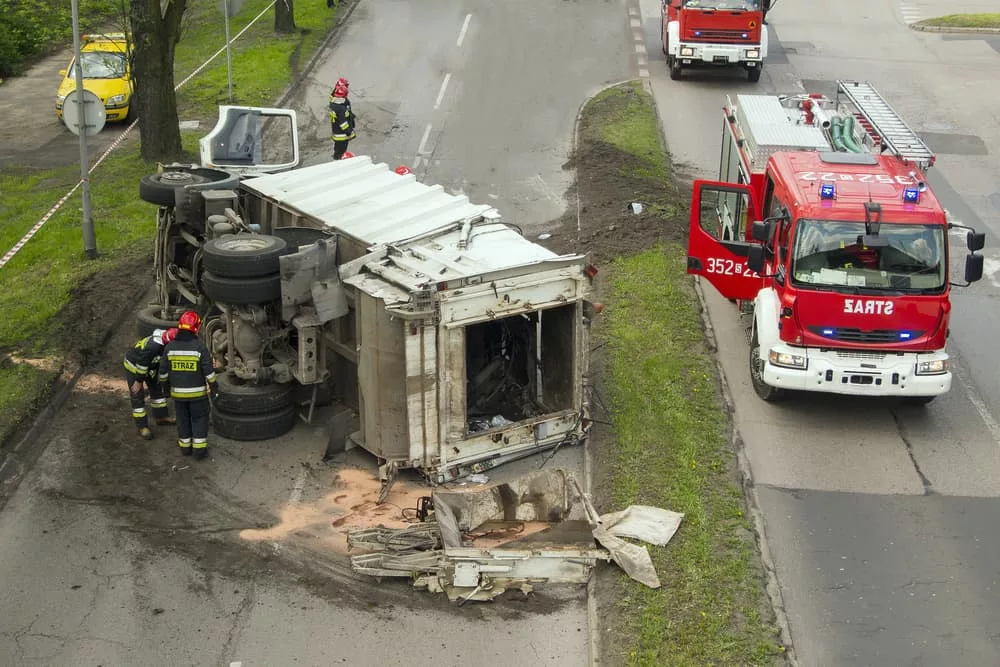







According to the National Highway Traffic Safety Administration, 5,472 people were killed in traffic crashes involving large trucks in 2023. Because of their size and weight, trucks can cause devastating injuries when they collide with passenger cars. Too often, a truck driver or trucking company’s negligence causes these accidents. Distracted driving, inadequate training, negligent hiring practices, and poorly maintained commercial vehicles can all contribute to truck accidents.
The Federal Motor Carrier Safety Administration (FMCSA) governs trucking companies and has established rules and regulations to prevent truck accidents.
After a crash, a truck accident lawyer often starts by asking which federal rules applied to the driver and carrier, and which records those rules required them to keep. A documented violation of the Federal Motor Carrier Safety Regulations (FMCSRs) may help show that a driver or carrier did not use reasonable care, although a violation does not by itself prove that it caused the crash. This guide walks through the main rules in Title 49 of the Code of Federal Regulations, the records each one creates, and how long carriers must keep them. For the driving behaviors that most often lead to crashes, see our overview of the causes of truck accidents.
What Is the Federal Motor Carrier Safety Administration?
The U.S. Department of Transportation established FMCSA under the Motor Carrier Safety Improvement Act of 1999 to establish safety guidelines among commercial motor vehicle (CMV) carriers and drivers to prevent truck accidents.
FMCSA partners with federal, state, and local enforcement agencies; the trucking industry; labor safety interest groups; and others to:
- Enforce safety regulations
- Hold high-risk carriers and truck drivers accountable for their actions
- Improve safety information systems and technologies
- Strengthen commercial truck equipment and operating standards
- Raise awareness of commercial vehicle safety.
FMCSA enforces many trucking industry rules and regulations.
Who Do FMCSA Rules and Regulations Cover?
FMCSA rules and regulations govern trucking industry carriers if they operate any of the following commercial motor vehicles in interstate commerce:
- Vehicles with a gross vehicle weight rating or gross combination weight rating (whichever is greater) of 10,001 pounds or more (GVWR, GCWR, G.V.W. or G.C.W.)
- Vehicles designed or used to transport more than 8 passengers (including the driver) for compensation
- Vehicles designed or used to transport more than 15 passengers, including the driver, when not used to transport passengers for compensation
- Vehicles of any size used to transport materials categorized as hazardous by the Hazardous Materials Transportation Act and that require placards under the Hazardous Materials Regulations (49 C.F.R. Parts 100-177)
- All Intrastate Hazardous Materials (Hazardous Materials Regulations) carriers
These definitions come from 49 C.F.R. Part 390. Carriers must ensure that their drivers know and comply with the FMCSRs and the Hazardous Materials Regulations in Title 49 of the Code of Federal Regulations, and violations found during inspections and investigations can affect a carrier’s safety record.
Overview of FMCSA Rules and Regulations

Truck drivers and trucking companies must comply with FMCSA rules and regulations to ensure the safety of others. In the case of a truck accident, a violation of an FMCSA regulation can help prove fault on the part of a truck driver or trucking company.
Here is an overview of some FMCSA rules and regulations for commercial motor vehicle carriers:
Hours of Service Regulations
FMCSA set hours of service (HOS) limits in 49 C.F.R. Part 395 to reduce driver fatigue. The limits count both driving time and total on-duty time, which includes work such as loading, fueling, and inspections.
Under 49 C.F.R. § 395.3, a property-carrying driver:
- May drive a maximum of 11 hours after 10 consecutive hours off duty
- May not drive beyond the 14th consecutive hour after coming on duty
- Must take a break of at least 30 consecutive minutes before driving more than 8 cumulative hours, and off-duty, sleeper-berth, or on-duty time spent not driving can count toward that break
- Must have 10 consecutive hours off duty before starting a new driving period
- May not drive after 60 hours on duty in 7 consecutive days, or 70 hours on duty in 8 consecutive days, and that count can restart after 34 or more consecutive hours off duty
Most carriers must record these hours on an electronic logging device (ELD) under section 395.8, and they must keep records of duty status and supporting documents for at least 6 months. Because that window is short, a written request to preserve the logs soon after a crash can matter. Our post on how hours-of-service violations lead to accidents covers fatigue evidence in more detail.
Drug and Alcohol Testing Regulations
Under 49 C.F.R. Part 382, employers must test drivers who need a commercial driver’s license, including:
- Pre-employment testing
- Random testing
- Post-accident testing
- Reasonable suspicion testing
- Return-to-duty and follow-up testing
Post-accident testing under section 382.303 is required after any qualifying crash involving a fatality. After a crash in which someone is treated for an injury away from the scene, or a vehicle is towed because of disabling damage, testing is required when the driver receives a citation for a moving violation arising from the crash. Employers are expected to give the alcohol test within 2 hours when possible and stop trying after 8 hours, and to stop trying the drug test after 32 hours, recording the reason for any test that was not given. Those records can show whether testing happened and when.
Vehicle Maintenance Requirements
Two parts of the regulations cover equipment. 49 C.F.R. Part 393 sets minimum standards for parts and accessories such as lighting, brakes, and cargo securement. Part 396 requires carriers to inspect, repair, and maintain their vehicles on a systematic basis, requires drivers to confirm a vehicle is safe before driving it and to report safety defects at the end of each day’s work, and requires an annual inspection of every CMV.
Each of those duties leaves a paper trail, including maintenance records, driver vehicle inspection reports, and annual inspection reports. Our post on a trucking company’s responsibility to keep trucks safe explains how maintenance failures can lead to injury claims.
Training Requirements for Truck Drivers
FMCSA establishes training requirements for truck drivers to ensure that drivers obtain proper qualifications and training to operate commercial motor vehicles:
Driver Qualification Requirements
Before a driver can operate a CMV, they must:
- Be at least 21 years old to drive in interstate commerce under 49 C.F.R. § 391.11, while Florida sets its own rules for trucks that stay within the state
- Possess a valid commercial driver’s license (CDL)
- Pass a medical examination to ensure they can physically operate a CMV
- Not be disqualified under section 391.15, which covers offenses such as driving under the influence, and pass a road test or hold an accepted equivalent
Carriers must also keep a driver qualification file for each driver, including the employment application, motor vehicle records, road test certificate, and medical examiner’s certificate, for as long as the driver works for them and for 3 years afterward under 49 C.F.R. § 391.51. That file can show what the carrier knew about a driver before a crash.
Training for Hazardous Materials Transportation
Drivers who transport hazardous materials (HM) must receive specialized training to ensure they can safely handle and transport these materials.
FMCSA requires that all HM drivers receive:
- General awareness/familiarization training with HM regulations
- Function-specific training (loading, unloading, etc.)
- Safety training
- Security awareness training
In addition to this initial training, HM drivers must also receive recurrent training every three years to remain up-to-date on the latest regulations and safety procedures.
Accident Reporting and Investigation Procedures
Truck drivers and carriers must follow proper reporting and investigation procedures to comply with FMCSA regulations and promote safety after an accident with a commercial motor vehicle.
Reporting Requirements for Accidents
Under 49 C.F.R. § 390.15, motor carriers must keep an accident register for 3 years after the date of each accident. The regulations define an accident as a CMV crash on a highway that results in a fatality, an injury treated immediately away from the scene, or disabling damage that requires a vehicle to be towed away.
The documents required by §390.15 (b) (2) include all information about a particular accident generated by a motor carrier or driver to fulfill its accident reporting obligations to state or other governmental entities or that motor carrier’s insurer.
Investigation Procedures for Accidents
Following an accident, proper investigation procedures should be followed to determine the cause of the accident and prevent future incidents.
A crash investigation often draws on several record sources at once: the police crash report, post-accident test results, the driver’s ELD data, the driver qualification file, inspection and maintenance records, and the carrier’s accident register. Some of those records can be discarded within months, so an injured person’s attorney may send the carrier a written request to preserve them soon after the crash.
Investigators and attorneys typically compare those records with the physical evidence, such as vehicle damage, event data, and scene photos, to test whether a rule violation actually contributed to the crash. Our post on how a lawyer preserves evidence for a truck accident claim explains that process.
FMCSA Records and How Long Carriers Must Keep Them
The table below summarizes minimum retention periods in the current regulations. A carrier may keep records longer under its own policies, and notice of a claim can affect what a carrier should preserve.
| Record | Rule | Minimum retention |
|---|---|---|
| Records of duty status (ELD data) and supporting documents | 49 C.F.R. § 395.8(k) | 6 months |
| Driver vehicle inspection reports | 49 C.F.R. § 396.11 | 3 months |
| Inspection, repair, and maintenance records | 49 C.F.R. § 396.3 | 1 year, or 6 months after the vehicle leaves the carrier’s control |
| Annual inspection report | 49 C.F.R. § 396.21 | 14 months |
| Accident register | 49 C.F.R. § 390.15 | 3 years after each accident |
| Driver qualification file | 49 C.F.R. § 391.51 | Length of employment plus 3 years |
Enforcement of FMCSA Rules and Regulations
Compliance with FMCSA rules and regulations can maintain truck safety.
FMCSA has established enforcement mechanisms to ensure that motor carriers and drivers adhere to these regulations.
Penalties for Non-Compliance
Carriers that fail to comply with FMCSA regulations may face penalties. Penalties for non-compliance can range from fines to suspension or revocation of operating authority. FMCSA may also place a carrier out of service for a history of non-compliance.
FMCSA bases its penalty schedule on the severity of the violation and the carrier’s safety history. For example, a carrier with a history of non-compliance may receive higher penalties than a carrier with a clean safety record.
Inspection Procedures and Criteria
FMCSA conducts inspections to ensure that carriers and drivers comply with its regulations.
FMCSA’s inspection procedures and criteria determine compliance, including:
- Driver and vehicle inspections
- Compliance reviews
- Safety audits
- On-site investigations
During an inspection, FMCSA may review a carrier’s safety management practices, driver qualifications, hours of service, and vehicle maintenance records. If FMCSA finds a carrier noncompliant, it may issue a notice of violation and require corrective action.
To avoid penalties and ensure compliance with FMCSA regulations, all carriers and drivers must maintain accurate records, conduct regular safety training, and stay up to date on regulatory changes.
How Can a Truck Accident Lawyer Help Me?
If a truck accident injured you, you may not know which rules applied to the driver and carrier or which records exist. An experienced attorney can identify the regulations that governed the trip and request the records before their retention periods run out.
An experienced lawyer can investigate your case and:
- Secure evidence from the trucking company, such as inspection reports or trucking logs
- Identify the accident cause and all liable parties
- Hire accident reconstruction, medical, engineering, and financial experts to provide testimony
- Determine the extent and value of your damages
- Negotiate a fair settlement with insurance companies
- File your case before Florida’s deadline, which for most negligence claims arising on or after March 24, 2023, is 2 years under section 95.11(5)(a), Florida Statutes
- Represent you in court and advocate for you should your case require a lawsuit
Frequently Asked Questions About FMCSA Rules and Truck Crashes
Does an FMCSA violation prove the trucking company is at fault?
Not by itself. A violation of the federal safety rules may be evidence that a driver or carrier failed to use reasonable care, but the injured person generally still has to show that the violation contributed to the crash and caused the injuries. Fault is decided on all of the evidence, including how every driver involved acted.
How long do trucking companies have to keep driver logs?
Federal rules require motor carriers to keep records of duty status and supporting documents for at least 6 months under 49 C.F.R. 395.8(k). Driver vehicle inspection reports only have to be kept for 3 months. Because these periods are short, an attorney may send the carrier a preservation request soon after a crash.
Do the federal rules apply to trucks that only operate within Florida?
The federal rules apply mainly to interstate commerce, but section 316.302, Florida Statutes, applies most of them to intrastate trucks as they existed on December 31, 2023, with some differences. For example, intrastate drivers who are not hauling placarded hazardous materials may drive up to 12 hours after 10 hours off duty and may not drive after the 16th hour on duty.
Is a truck driver always drug and alcohol tested after a crash?
Not always. Under 49 C.F.R. 382.303, testing is required after a crash involving a fatality. After a crash involving an injury treated away from the scene or a vehicle towed for disabling damage, testing is required only if the driver is cited for a moving violation arising from the crash.
What is the 34-hour restart?
A property-carrying driver may not drive after 60 hours on duty in 7 days, or 70 hours on duty in 8 days. Under 49 C.F.R. 395.3(c), that period can restart after the driver takes at least 34 consecutive hours off duty. The driver’s logs can show whether that break actually happened.
Contact a Truck Accident Lawyer Today
Truck accidents can result in serious, catastrophic injuries and staggering bills for medical treatment. A truck accident lawyer can handle the legal side of your case, including record requests and filing deadlines, while you focus on treatment.
You can trust a truck accident lawyer to handle your truck accident claim professionally and thoroughly so you can focus on your own recovery. Don’t delay. Contact a personal injury attorney in Miami today for your free consultation and case evaluation.
Schedule a Free Initial Consultation Today!

Christopher D. Alas is the founder and managing attorney of Redemption Law, a personal injury firm licensed in Texas and Florida. He oversees the firm’s litigation strategy and draws on a background in tax law to help clients understand the financial and legal implications of their injury claims. Read full bio
Christopher D. Alas is the founder and managing attorney of Redemption Law, a personal injury firm licensed in Texas and Florida. He oversees the firm’s litigation strategy and draws on a background in tax law to help clients understand the financial and legal implications of their injury claims. Read full bio