



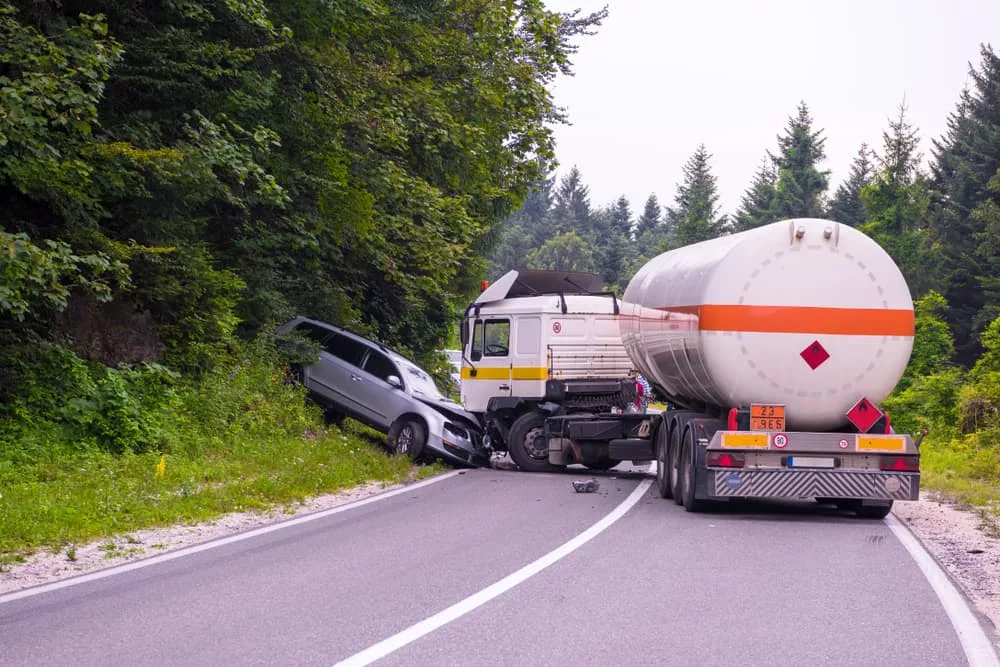



A rear-end crash involving a large truck can happen two ways: the truck strikes a smaller vehicle from behind, or a car strikes the back of a truck or trailer. Both can cause serious injuries, and both raise questions that ordinary rear-end crashes usually do not, such as truck stopping distances, federal safety equipment rules, and multiple insurers.
Below, we explain why these crashes are different, how Florida law approaches fault in rear-end collisions, and what evidence matters most in a truck case.
If you were hurt in a rear-end trucking collision, a rear-end truck accident lawyer can answer your questions, explain your options, and help you pursue compensation. For ordinary car-to-car rear-end crashes, see our guide on who is at fault in a rear-end accident.
Rear-End Truck Accidents are More Dangerous Than Other Types of Rear-End Collisions
Not all rear-end collisions are the same. A rear-end crash between two passenger cars usually produces very different results than one involving a fully loaded tractor-trailer, because of the difference in size and weight.
First, it’s helpful to understand what a rear-end collision is. In a rear-end accident, the front of one vehicle collides with the back of another. A rear-end trucking accident typically means the front of the truck has collided with the back of a vehicle.
There are several reasons why rear-end truck accidents are more hazardous and harmful than others. Some of the more significant reasons are as follows.
Greater Impact and Damage
A loaded tractor-trailer can weigh many times more than a passenger car, and it needs more distance to stop. When a truck strikes a vehicle from behind, the force involved can cause severe damage even at moderate speeds.
Because of a truck’s size and weight, a commercial truck accident can cause much more harm than a crash between smaller vehicles. A truck can push a car into traffic or override it entirely, particularly at higher speeds.
Rear-end accidents can cause injury and property damage, but more so if the vehicle in the rear is a large truck.
Potential for Several Collisions
A rear-end truck collision has the potential to cause a chain reaction involving several victims.
When a truck collides with the back of another vehicle, it’s normal for the impact of the collision to cause that first car to run into other vehicles ahead of them. From there, it can cause a chain reaction, causing the next car to run into the rear of the one in front of them, and so on.
A multi-car pileup makes the situation more challenging. This usually means more victims, more injury, and more property damage, which can make it more difficult to obtain fair compensation for your losses.
Multiple Defendants
Florida courts have long applied a presumption that the driver who rear-ends another vehicle was negligent. In Birge v. Charron (2012), the Florida Supreme Court held that this presumption can be rebutted and does not override comparative fault, so a jury can still weigh evidence that the lead driver stopped suddenly and unexpectedly or that someone else contributed to the crash. In a truck case, that evidence often comes from several sources at once.
For example, if the truck could not stop because of brake failure, the party responsible for truck maintenance and repairs or the truck’s owner may also share fault. Under section 768.81, fault is allocated among the parties, and a person found more than 50 percent at fault for their own harm may not recover damages.
When your truck accident involves several defendants, your case can be harder to handle, as you may have to deal with multiple insurance companies. This is one of the most important reasons to have an experienced truck accident attorney take on your case.
Common Causes of Rear-End Semi-Truck Accidents
Rear-end collisions can happen for a variety of reasons. Sometimes, more than one factor contributes to your accident.
Determining the cause of your collision is often the first step. Once you understand what caused your accident, you’ll know who can be responsible for your injuries and related losses.
The following are just some of the more common causes of rear-end truck accidents.
Speeding
Speeding is a significant problem on roads. Drivers have different motivations for speeding, whether running behind schedule or experiencing road rage.
Some drivers just get into the habit of speeding, especially if they’ve done so on multiple occasions with no repercussions. Regardless of the motivation behind speeding, it’s dangerous to drivers and others on the road.
Delivery schedules can put pressure on drivers to make up time. Dispatch records, delivery logs, and the truck’s electronic data can show whether speed or schedule pressure played a role in a particular crash.
Speed limits are not mere suggestions. There’s a reason why certain roads have specific speed limits, as driving at these speeds helps keep drivers safer. When truck drivers speed, there can be consequences.
Speeding can:
- Increase stopping time and distance
- Lead to greater impact in the event of a crash
- Cause drivers to lose control over their vehicles easier
- Reduce the effectiveness of vehicle safety equipment
The driver is responsible for the truck’s speed, but a motor carrier may also be responsible if its scheduling or supervision encouraged unsafe driving. Federal hours of service rules limit how long commercial drivers may drive, and violations can be evidence of negligence.
Tailgating
Tailgating is a common dangerous driving behavior. When drivers tailgate, they follow the vehicle in front of them too closely. Drivers tailgate for many reasons, including road rage, frustration with traffic, and impatience.
When a truck driver tailgates, they don’t leave enough room between themselves and the vehicle in front of their truck. The danger of this is heightened when they speed. When a driver tailgates, there is little to no room to stop in case of an emergency.
Because of their weight, large trucks already need more time and distance to stop. When truck drivers tailgate, it makes the situation riskier and heightens the likelihood of a rear-end collision.
Florida law addresses following distance directly. Section 316.0895 prohibits following another vehicle more closely than is reasonable and prudent, and outside business or residence districts it makes it unlawful for a motor truck, or a vehicle towing a trailer, to follow within 300 feet of another such vehicle, except when overtaking and passing or in lanes designated for trucks.
Distracted Driving
Drivers should always give all of their attention to the task at hand. This is especially true for truck drivers, as driving a truck requires special patience and skill.
“Distracted driving” is an umbrella term for anything that takes a driver’s eyes off the road, hands off the steering wheel, or mind off of driving. Different types of distractions exist, including manual, visual, and cognitive.
Manual distractions cause a driver to take one or both hands off the steering wheel. This includes eating, changing the radio station, or texting.
Visual distractions cause a driver to divert their eyes away from the road. Some of these distractions are also visual, like looking down at a cell phone or looking for something within the vehicle.
Cognitive distractions cause the driver to take their attention off of driving. Driving is often second nature to many drivers, making it easier to let their minds wander. These distractions commonly include daydreaming and having involved conversations with other passengers.
It can be easy for truck drivers to become distracted, especially with the long hours they spend on the road. Still, one quick distraction can have serious consequences.
Fatigued Driving
Driver fatigue is a significant issue for truck drivers. Federal trucking regulations address hours of service, providing strict rules against excessive working hours for truckers. Drivers can only drive a certain number of hours before they must take a break.
Fatigue can reduce reaction time in the same way that alcohol does. Electronic logging device records, fuel and toll receipts, and delivery records can show whether a driver was within the hours of service limits at the time of the crash.
Driving Under the Influence
Driving under the influence of alcohol or drugs is illegal in every state. It’s nearly impossible for drivers to safely operate vehicles, as alcohol and substances negatively affect the body and natural reactions.
Drinking and driving can result in:
- Drowsiness
- Reduced reaction times
- Impaired vision
- Reduced concentration
- Risk-taking
Commercial drivers are subject to federal drug and alcohol testing rules, including testing after certain crashes. Those test results, along with any police findings, can be important evidence when impairment may have played a role in a rear-end truck crash. Our drunk driving accident page explains how impaired-driving claims work.
Mechanical Defect or Failure
Trucks are complicated machines, and many things can go wrong. Brake failure, steering problems, and other mechanical issues can make it harder for a driver to maintain control or stop in time.
If a truck driver experiences a sudden problem with their truck while on the road, it can be easier for them to lose control and cause a truck accident. In a situation like this, a driver may not have the ability to prevent a collision with other drivers.
Hazardous Road Conditions
Cities and other governmental entities are responsible for keeping roads safe and clear of any hazardous conditions. Irregular road maintenance and failure to fix issues can make it more dangerous for all drivers.
When a truck driver encounters a risky situation on the road, they may lose control of their truck and collide with others nearby. When this happens, truck drivers may only share some of the blame, if at all.
When a Car Rear-Ends a Truck: Underride Risks
Some of the most serious rear-end truck crashes happen when a passenger vehicle strikes the back of a trailer. Because trailers sit high off the ground, a car can slide underneath, which is called an underride. Federal rules in 49 CFR 393.86 require most trailers and semitrailers with a gross vehicle weight rating of 10,000 pounds or more, manufactured on or after January 26, 1998, to have a rear impact guard that meets federal motor vehicle safety standards.
Even when the car struck the truck, the truck side may share fault. A missing, damaged, or poorly maintained rear guard, broken taillights or reflective tape, or a truck stopped or parked in a travel lane without proper warning devices can all be relevant. The Florida rear-end presumption is a starting point, not the final word, in these cases.
Injuries Common to Rear-End Truck Wrecks
Because of the weight difference, rear-end truck crashes can cause serious injuries, including neck and back injuries, traumatic brain injuries, spinal cord injuries, fractures, and internal injuries. Some injuries, such as concussions and soft tissue injuries, may not be obvious right away, so prompt medical evaluation matters for both your health and your claim. Under Florida law, you must receive initial treatment within 14 days to keep access to personal injury protection benefits.
Liability for Rear-End Collisions
Determining liability is key to pursuing compensation. In rear-end trucking crashes, more than one party may share responsibility, and each may have its own insurer.
Some parties who might have caused your collision include:
- The truck driver
- The truck driver’s employer
- The trucking company
- The owner of the truck
- The owner of the cargo
- The entity responsible for truck maintenance and repairs
- The truck or truck part manufacturers or distributors
- The party responsible for loading cargo
- A governmental entity
In some cases, only one party, such as the truck driver, is responsible. In others, several parties share fault, and Florida’s comparative fault rules allocate responsibility among them. Commercial trucks also tend to carry larger insurance policies than passenger cars. Under 49 CFR 387.9, for-hire interstate carriers of nonhazardous property using vehicles of 10,001 pounds or more must carry at least $750,000 in financial responsibility, and Florida applies many federal motor carrier rules to commercial vehicles through section 316.302.
Evidence to Help Establish Fault
Evidence helps determine who is at fault and supports your claim. In truck cases, some of the most useful evidence is in the trucking company’s control, which is why a preservation letter sent early can be important.
Evidence that can assist with your claim includes:
- Witness statements
- Traffic camera and dash camera footage
- Electronic control module (black box) and electronic logging device data
- Police reports
- Accident reconstruction and inspection reports
Proving fault in a rear-end truck crash can be challenging, especially when the trucking company argues that the lead vehicle stopped suddenly. Strong documentation, gathered before it is lost or overwritten, can make that task easier.
Collecting Damages for Rear-End Truck Accidents
Damages depend on your injuries and losses. A truck accident attorney reviews your medical records, bills, and lost income, along with the effect of your injuries on daily life, to estimate the value of your claim.
The damages you may obtain include:
- Medical and rehabilitation costs
- Lost earnings
- Impact on your earning capacity
- Pain and suffering
- Disability
- Loss of enjoyment of life
Pursuing compensation after a truck accident may involve several insurance claims and sometimes a truck accident lawsuit. A truck accident lawyer can help you identify each available source of recovery and represent you throughout the process.

Time is Limited to Take Action After a Rear-End Truck Accident
After a truck accident, acting promptly helps protect both your evidence and your right to recover. For most negligence claims arising after March 24, 2023, section 95.11, Florida Statutes, allows two years to file a lawsuit, and claims involving government vehicles or roadways can carry separate notice requirements. Our article on how long you have to file a claim for a truck accident covers these deadlines.
A truck accident lawyer can move quickly to request preservation of truck data, gather records, and meet filing deadlines, which can help avoid complications later in your case.
After a truck accident, don’t hesitate to consult a personal injury lawyer in Miami. Most reputable attorneys offer free consultations to discuss the details of your case, assess its merits, and provide valuable legal insights. This initial consultation helps you make informed decisions about pursuing a legal course of action.
Begin protecting your future by scheduling your free case evaluation today.
Frequently Asked Questions About Rear-End Truck Accidents
Is the rear driver always at fault in a Florida rear-end truck crash?
Not always. Florida courts presume the rear driver was negligent, but the Florida Supreme Court held in Birge v. Charron that the presumption can be rebutted and does not override comparative fault. Evidence of a sudden, unexpected stop, faulty equipment, or another driver’s conduct can shift some or all of the fault.
How far behind another truck must a truck stay in Florida?
Section 316.0895 requires every driver to keep a reasonable and prudent following distance. Outside business or residence districts, it also makes it unlawful for a motor truck or a vehicle towing a trailer to follow within 300 feet of another such vehicle, except when passing or in lanes designated for trucks.
What is a truck underride crash?
An underride crash happens when a passenger vehicle slides underneath the rear or side of a trailer. Federal rules in 49 CFR 393.86 require most trailers and semitrailers manufactured on or after January 26, 1998, with a gross vehicle weight rating of 10,000 pounds or more, to have a rear impact guard.
How much insurance do trucking companies carry?
For-hire interstate carriers of nonhazardous property using vehicles of 10,001 pounds or more must carry at least $750,000 in financial responsibility under 49 CFR 387.9. Some carriers carry more, and other parties, such as a maintenance company or cargo loader, may have separate coverage.
How long do I have to file a rear-end truck accident lawsuit in Florida?
For most negligence claims arising after March 24, 2023, section 95.11 allows two years to file a lawsuit. Claims involving government vehicles or roads have separate notice rules, and truck data can be overwritten, so it helps to contact a lawyer as soon as possible.

Christopher D. Alas is the founder and managing attorney of Redemption Law, a personal injury firm licensed in Texas and Florida. He oversees the firm’s litigation strategy and draws on a background in tax law to help clients understand the financial and legal implications of their injury claims. Read full bio
Christopher D. Alas is the founder and managing attorney of Redemption Law, a personal injury firm licensed in Texas and Florida. He oversees the firm’s litigation strategy and draws on a background in tax law to help clients understand the financial and legal implications of their injury claims. Read full bio
Christopher D. Alas is the founder and managing attorney of Redemption Law, a personal injury firm licensed in Texas and Florida. He oversees the firm’s litigation strategy and draws on a background in tax law to help clients understand the financial and legal implications of their injury claims. Read full bio


