



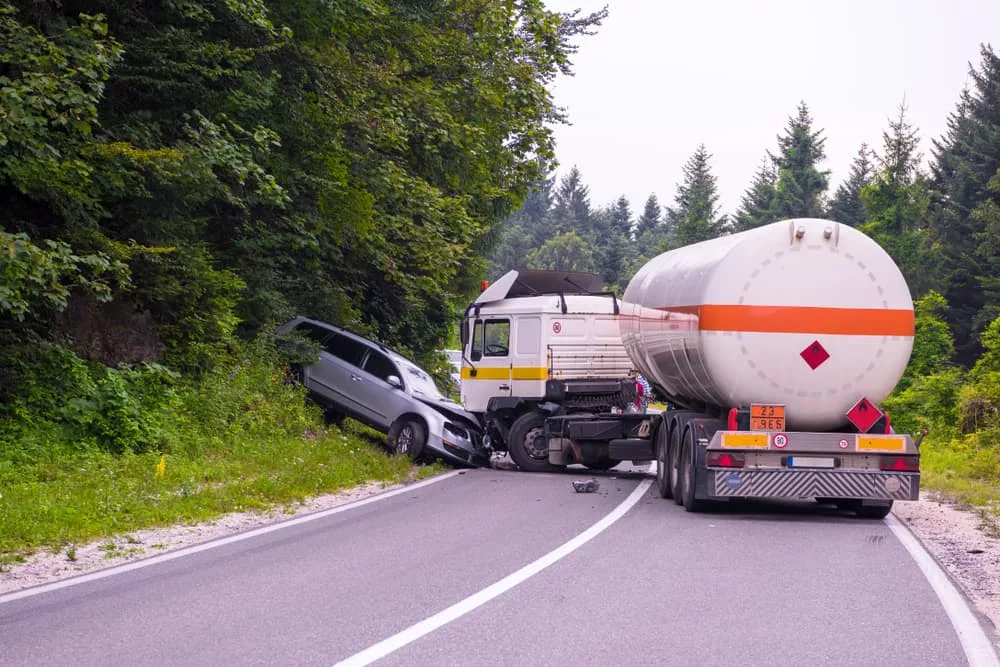


If you were hurt in a Florida crash and GEICO insures you, the other driver, or both of you, your injury claim may run through several different GEICO coverages at once. Each coverage has its own rules, deadlines, and duties, and knowing which one you are dealing with makes the process much easier to follow.
Car, motorcycle, and truck accidents can cause painful and life-changing injuries that require costly medical treatment. Florida law gives injured people several ways to seek payment for those losses, starting with their own coverage.
The personal injury lawyers at Redemption Law handle claims involving many auto insurers, including GEICO. The steps below apply to any Florida claim where GEICO is one of the insurers involved.
Here’s how our personal injury lawyers handle Geico injury claims for our clients:
Common Injury Claim Accidents
Our lawyers deal with Geico on many accident cases, including:
- Car accidents
- Pedestrian accidents
- Truck accidents
- Rideshare accidents
- Motorcycle accidents
- Bicycle accidents
About Geico

GEICO was founded in 1936 as the Government Employees Insurance Company and is now a subsidiary of Berkshire Hathaway. It is one of the largest auto insurers in the United States, so it is common for GEICO to insure at least one of the drivers in a Florida crash. Being a large insurer does not change the Florida rules that apply to your claim; those rules are the same no matter which company issued the policy.
Which GEICO Coverage Applies to Your Florida Claim?
A single Florida crash can involve several coverages. This table shows the most common ones and who each one protects.
| Coverage | Whose policy | What it generally pays |
|---|---|---|
| Personal injury protection (PIP) | Your own policy | 80% of reasonable medical expenses and 60% of lost income, up to $10,000, regardless of fault |
| Bodily injury liability | The at-fault driver’s policy | Injury damages beyond PIP, if the driver carries it and your injury meets Florida’s threshold |
| Uninsured/underinsured motorist (UM) | Your own policy | What you could recover from an at-fault driver who has no coverage or too little |
| Property damage liability | The at-fault driver’s policy | Damage to your vehicle and other property |
If GEICO insures you, your PIP and UM claims are first-party claims under your own contract. If GEICO insures only the other driver, your injury claim is a third-party claim, and GEICO’s obligations run to its own policyholder rather than to you.
Filing a GEICO Injury Claim in Florida
Florida is a no-fault state, which means your own PIP coverage pays a share of your medical bills and lost income after a crash, regardless of who caused it. PIP does not pay for everything, and claims against the at-fault driver are limited to more serious injuries, as explained below.
GEICO policyholders can report an accident through the company’s app, website, or claims phone line. Report the crash promptly, because your policy requires timely notice, and get initial medical treatment within 14 days so you do not lose access to PIP benefits.
When you report the accident, you will usually give the date, time, and location, the vehicles involved, and the other driver’s name and insurance information. Your duties differ depending on whose insurer is asking. Under your own policy, you have a duty to cooperate, and section 627.736(6)(g) and (7) allow a PIP insurer to require an examination under oath and a medical examination as conditions of benefits. The other driver’s insurer is a different matter: you generally have no obligation to give it a recorded statement or sign a medical authorization.
Whichever insurer you speak with, stick to the facts and avoid guessing about fault, speed, or the extent of your injuries before you have seen a doctor. A lawyer can handle these communications for you, which helps keep your statements accurate and consistent.
Required Insurance in Florida
Florida requires vehicle owners to carry at least $10,000 in personal injury protection (PIP) and $10,000 in property damage liability coverage. PIP pays 80 percent of reasonable medical expenses and 60 percent of lost income, and the full $10,000 medical benefit applies only if a qualifying provider determines you had an emergency medical condition. If your losses exceed PIP and your injury meets the threshold below, you may bring a third-party claim against the at-fault driver.
Filing a Third-Party Claim
If the at-fault driver is insured by GEICO, your injury claim beyond PIP goes to GEICO as a third-party claim. If both drivers are GEICO policyholders, GEICO will typically handle your PIP claim and the at-fault driver’s liability claim as separate claims. In either case, it helps to keep track of which claim number and adjuster belongs to which coverage.
Florida limits lawsuits against at-fault drivers for pain and suffering. Under section 627.737(2), you may recover those damages only if your injury falls into one of the statute’s categories. Property damage claims are not subject to this injury threshold.
The statutory threshold categories are:
- Significant and permanent loss of an important bodily function
- Permanent injury within a reasonable degree of medical probability, other than scarring or disfigurement
- Significant and permanent scarring or disfigurement
- Death
How a GEICO Injury Claim Is Evaluated
After a claim is reported, the adjuster typically reviews the crash report, photos, statements, and your medical records and bills. Based on that information, the insurer evaluates liability and the value of the claim and may make a settlement offer.
An offer on a liability claim may include economic damages, such as medical bills and lost income, and non-economic damages, such as pain and suffering, if your injury meets Florida’s threshold.
An early offer can arrive before you know how much treatment you will need. Before accepting any offer, it is worth consulting an attorney, because a settlement usually requires signing a release that ends the claim, even if your injuries later turn out to be more serious.
The value of non-economic damages, such as pain and suffering, depends heavily on medical documentation of how the injury affects your daily life, so incomplete records can lead to a lower evaluation.
If you are unsure whether an offer is fair, a lawyer can review it against your records and explain the options before you decide. We offer free consultations to talk through those questions.
How Our Lawyers Handle GEICO Injury Claims
Here is how we typically approach an injury claim when GEICO is one of the insurers involved.
We Will Investigate Your Accident
We investigate how the crash happened, using photos of the scene, the crash report, vehicle damage, witness statements, and any available video. Florida uses modified comparative fault under section 768.81(6), so a person found more than 50 percent at fault for their own harm may not recover damages, and evidence about fault matters from the start.
We Will Identify All Liable Parties
The evidence can also show whether anyone besides the other driver may be responsible, such as an employer, a vehicle owner, a trucking company, or a government entity, each of which may have its own insurer.
We Will Value Your Claim
Your lawyer values your injury claim by identifying all your damages. Damages are the losses you sustain from your accident injuries.
Economic damages are monetary losses for which you can show an actual value, such as medical bills for treatments, surgeries and procedures, hospitalizations, medication, and rehabilitation. If the accident caused severe or disabling injuries, this can include future medical needs, home modifications, or special equipment.
Your economic damages may also include lost income if your injuries prevented you from working or loss of future income if you cannot return to work in the same capacity as before the accident.
Non-economic damages are non-monetary losses, such as pain and suffering. Non-economic damages are more subjective and, thus, more difficult to value. Depending on your injuries, you may recover compensation for mental anguish, disfigurement, loss of enjoyment of life, or loss of consortium.
We gather your medical records, bills, and wage information to document the full extent of your damages before preparing a demand. There is no fixed formula for non-economic damages in Florida. If a case goes to trial, the jury decides a fair amount based on the evidence of how the injury has affected your life.
Once the claim is documented, we send a written demand to the insurer that explains liability, your injuries, and the damages you are seeking. Our article on how lawyers evaluate pain and suffering covers this in more detail.
Why Complete Records Matter
An adjuster can only evaluate what is in the file. Missing records, gaps in treatment, or an unclear account of how the injury limits your work and daily activities can all lead to a lower evaluation.
Negotiation usually involves an exchange of offers and responses. Additional documentation, such as a treating doctor’s opinion about future care, can support a request to reconsider an offer.
Future treatment, ongoing care, and emotional effects of an injury are easy to leave out of a claim, so we work to document them before any settlement is discussed.
We Will Negotiate With Geico for a Fair Settlement
If an offer does not reflect your documented losses, we respond and continue negotiating. Whether to accept any offer is always your decision. If a fair settlement is not possible, the next step depends on the claim. For a third-party claim, Florida’s section 627.4136 generally prevents a direct suit against the liability insurer until you obtain a settlement or verdict against its insured, so the lawsuit is filed against the at-fault driver. For your own PIP or UM claim, a suit may be brought under the policy after any required pre-suit notice. Our guide on what to do if an insurance company denies your car accident claim explains those notice rules.
We Will Represent You in Court
If necessary, we can file your case in civil court before the deadline. For most negligence claims arising after March 24, 2023, section 95.11 allows two years to file a lawsuit. Claims under your own UM policy and claims against government entities can follow different deadlines and notice rules.
Filing a lawsuit does not end settlement discussions, and many injury cases resolve before trial. If yours does not, the case proceeds through discovery and, if needed, a trial.
If your case goes to trial, our lawyers can represent you in court and present the evidence of your losses to the jury.
Frequently Asked Questions About GEICO Injury Claims in Florida
Do I have to give GEICO a recorded statement after a Florida car accident?
It depends on whose policy is involved. If GEICO is your own insurer, your policy requires cooperation, and a PIP insurer can require an examination under oath and a medical examination under section 627.736. If GEICO insures only the other driver, you generally have no obligation to give it a recorded statement.
What happens if both drivers are insured by GEICO?
GEICO will usually handle your own PIP claim and the at-fault driver’s liability claim as separate claims with separate claim numbers. The same Florida rules apply to each claim as they would if two different companies were involved.
Can I sue GEICO directly if it will not pay my injury claim against its insured?
Generally not at first. Florida’s section 627.4136 requires you to obtain a settlement or verdict against the insured driver before bringing an action against the liability insurer, so the lawsuit is usually filed against the at-fault driver. Claims under your own GEICO policy, such as PIP or UM, follow different rules.
How much does PIP pay after a Florida accident?
PIP pays 80 percent of reasonable, medically necessary expenses and 60 percent of lost gross income, up to the $10,000 limit, regardless of fault. You must receive initial treatment within 14 days, and medical benefits are limited to $2,500 unless a qualifying provider finds an emergency medical condition.
How long do I have to file an injury lawsuit after a crash in Florida?
For most negligence claims arising after March 24, 2023, section 95.11 allows two years to file a lawsuit. Different deadlines can apply to claims under your own UM policy and to claims against government entities, so it is best to speak with a lawyer early.
Contact a Lawyer with Redemption Law Today
When GEICO is involved in your Florida injury claim, the same rules apply as with any insurer: know which coverage you are claiming under, meet your policy duties, document your injuries thoroughly, and do not sign a release until you understand what you are giving up. If another driver had too little coverage, our guide to accidents with an underinsured driver explains how your own UM coverage may help.
The Miami personal injury attorney at Redemption Law can review your GEICO claim, explain which coverages apply, and handle communications with the insurer so you can focus on your recovery. Contact our Miami car accident lawyers for a free consultation and case evaluation.
Schedule a Free Initial Consultation Today!

Christopher D. Alas is the founder and managing attorney of Redemption Law, a personal injury firm licensed in Texas and Florida. He oversees the firm’s litigation strategy and draws on a background in tax law to help clients understand the financial and legal implications of their injury claims. Read full bio
Christopher D. Alas is the founder and managing attorney of Redemption Law, a personal injury firm licensed in Texas and Florida. He oversees the firm’s litigation strategy and draws on a background in tax law to help clients understand the financial and legal implications of their injury claims. Read full bio
Artículos relacionados
Artículos relacionados Artículos relacionados Artículos relacionados Artículos relacionados Artículos relacionados Artículos relacionados Artículos relacionados Artículos relacionados Artículos relacionados Artículos relacionados
Lesiones personales
03 Nov 2026
Who Is Liable When a Rideshare Driver Hits a Pedestrian in Texas?
Lesiones personales
02 Nov 2026
What to Do if You’re Involved in an Accident With a Self-Driving Car Like Waymo